
Franklin County Sex Offender Checks
The official route begins with the Washington State Patrol sex and kidnapping offender information service. WSP directs the public to county searches and explains the state's disclosure system. Choose Franklin County for a county view, or narrow by Pasco, Connell, Kahlotus, ZIP code, street address, or a name when those details are known. A place search is best for neighborhood awareness. A name search is more useful when checking whether a known person has a published profile.
Franklin County does not use a separate registration level to set every person's duty length. The public result reflects data shared through the Washington system and the registering sheriff. Some records may be held back by law, and some addresses describe a transient, homeless, incarcerated, or other nonstandard status. A blank map area therefore does not prove that no registrant lives nearby. Read the result details, date cues, and agency contact before drawing a conclusion.
Franklin County Registry Office
Registration occurs through the Franklin County Sheriff's Office under Washington law. The verified office is at 1016 N Fourth Avenue, D201, Pasco, WA 99301. Its main and records number is 509-545-3501, and published public hours are Monday through Friday, 8:30 a.m. to 4 p.m. A registrant should call first for the exact appointment place and procedure because ordinary records-counter service is not necessarily the registration appointment process.
Franklin County Sheriff's Office
1016 N Fourth Avenue, D201
Pasco, WA 99301
509-545-3501
Monday-Friday, 8:30 a.m.-4 p.m.
The registration statute itself is visible through the Washington Legislature's RCW 9A.44.130 page.
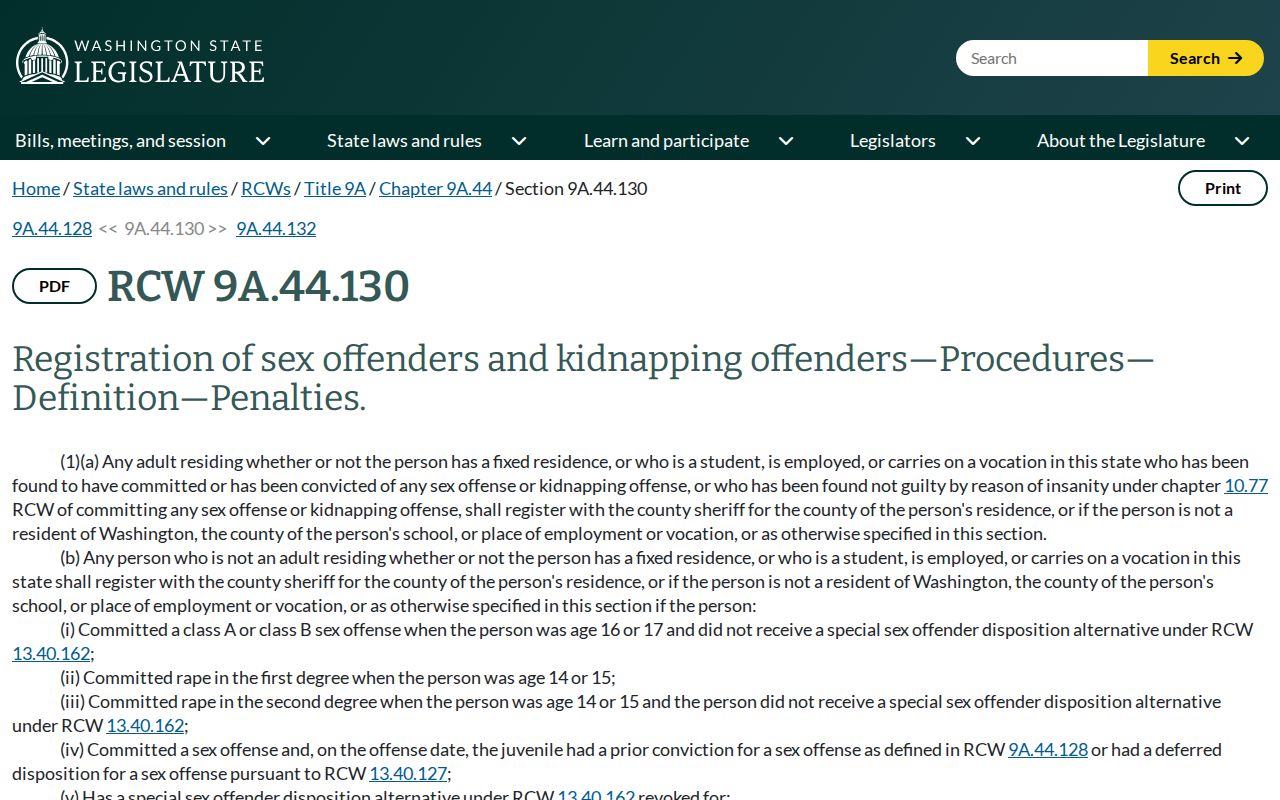
The statute view helps a reader distinguish a legal reporting duty from the separate question of what information appears on a public registry profile.
Washington State Sex Offender Public Registry Searches
The Washington State Sex Offender Public Registry supports more than one kind of query. Start with the narrowest reliable fact. A correct last name may avoid broad geographic results, while an address or ZIP search can show published records near a place. County and city filters help keep Franklin County results separate from neighboring Benton County and the rest of Washington.
- Open the WSP sex offender information page and follow its county-search route.
- Select Franklin County, or use a supported name, city, ZIP, address, or radius query.
- Review the list or map and compare the available identifying details before choosing a profile.
- Open the profile, note its risk and compliance information, and contact the listed agency when a key fact appears stale.
The available fields change by search mode. Do not force a value into a field the live form does not require.
| Field | Type | Required | Use |
|---|---|---|---|
| Last Name | Text | Depends on mode | Starts a name search; follow the live partial-name rules. |
| First Name | Text | Optional | Narrows a name result. |
| County | Dropdown | Geographic mode | Select Franklin. |
| City | Text or dropdown | Optional | Narrow to Pasco, Connell, Kahlotus, or another locality. |
| ZIP Code | Text | Optional | Use a five-digit local ZIP. |
| Address | Text | Address mode | Follow the live street, city, and ZIP format. |
| Radius | Dropdown | Optional | Use only the distances displayed by the portal. |
Franklin Registry and NSOPW
The Franklin County filter is the best starting point for Washington-specific risk and local registration information. The National Sex Offender Public Website, operated by the U.S. Department of Justice, adds a cross-jurisdiction search across participating states, territories, and tribes. That wider view matters near county and state lines or when a person has moved. NSOPW does not replace the Washington source for Franklin County classification or local updates.
The national search broadens geographic reach, while WSP and the Franklin County Sheriff's Office remain the better sources for a Washington profile's current local meaning.
Search both systems with the same careful approach. Names can be shared. Addresses can change. Compare a photo, physical description, alias, offense information, and the responsible agency instead of relying on one matching name. If the two official systems do not align, ask the agency listed on the Washington profile about the difference rather than treating one screen as final.
Registry Profiles: What They Show
A public profile is a notification record, not a full court file or complete Washington criminal history. It may combine identity, appearance, registration, offense, location, and agency details that the law permits for public release. Publication depends on the person's classification and legal status. Vehicle, school, or work facts appear only when authorized and supplied.
| Name and aliases | Published identifying names used to separate similar records. |
|---|---|
| Photo and description | A photograph and permitted traits such as height, weight, hair, eyes, scars, marks, or tattoos. |
| Address or location | A residence or qualifying description, subject to legal limits and current status. |
| Offense information | Published conviction, offense, and statute details. |
| Risk level | Washington's Level I, II, or III community-notification assessment. |
| Registration status | Available compliance, agency, and verification information. |
A profile may omit protected facts and may not display every person who has ever been convicted of a sex offense. For the underlying judgment, use the sentencing court. For a broader public Washington history product, WATCH serves a different function. Each record answers a distinct question.
Outdated Franklin County Registry Pins
A map pin can look wrong for several reasons. A registrant may have moved, become homeless or transient, entered custody, or reported a change that has not yet appeared on the public view. Publication law may also limit the precision of the location. Avoid visiting an address or confronting anyone. The safe next step is to save the profile's public reference details and call the responsible law-enforcement agency.
Report suspected noncompliance to local police or the Franklin County Sheriff's Office. Give the agency the facts that caused concern, not a guess about motive. Officers can compare public information with records that are not open to general inspection. Community members should not attempt their own surveillance or enforcement. That can create risk, interfere with official work, and misuse data supplied for awareness.
Registration Levels and Duties in Washington
Washington uses Level I, II, and III as risk-based notification labels. Level I is the lowest assessed risk, Level II is moderate, and Level III is high. Public release generally expands with the assessed risk. Level I information is often not published broadly unless a statute allows it. The level does not itself set a ten-year, fifteen-year, or lifetime registration term.
Duration instead follows the offense and status rules in RCW 9A.44.140. Many Class A offenses carry lifetime registration, Class B offenses generally carry fifteen years, and Class C offenses generally carry ten years. Tolling, federal rules, offense-specific terms, and relief provisions can change an individual result. The following comparison keeps risk notice and duty length separate.
| Public label or offense class | What it controls | General rule |
|---|---|---|
| Level I | Community notification | Lowest assessed risk; broad publication may be limited. |
| Level II | Community notification | Moderate assessed risk; broader public notice. |
| Level III | Community notification | High assessed risk; broadest public notice. |
| Class C offense | Registration duration | Generally ten years, subject to the current statute. |
| Class B offense | Registration duration | Generally fifteen years, subject to the current statute. |
| Many Class A offenses | Registration duration | Lifetime, subject to offense and relief rules. |
Franklin County Registry Notification
Franklin County's sheriff carries out local registration and community-notification duties. RCW 4.24.550 authorizes risk-based disclosure and protects good-faith notification activity. The law explains why two profiles may have different levels of public detail even when both people have a registration duty.
The official community-notification statute shows the legal framework used by law enforcement.
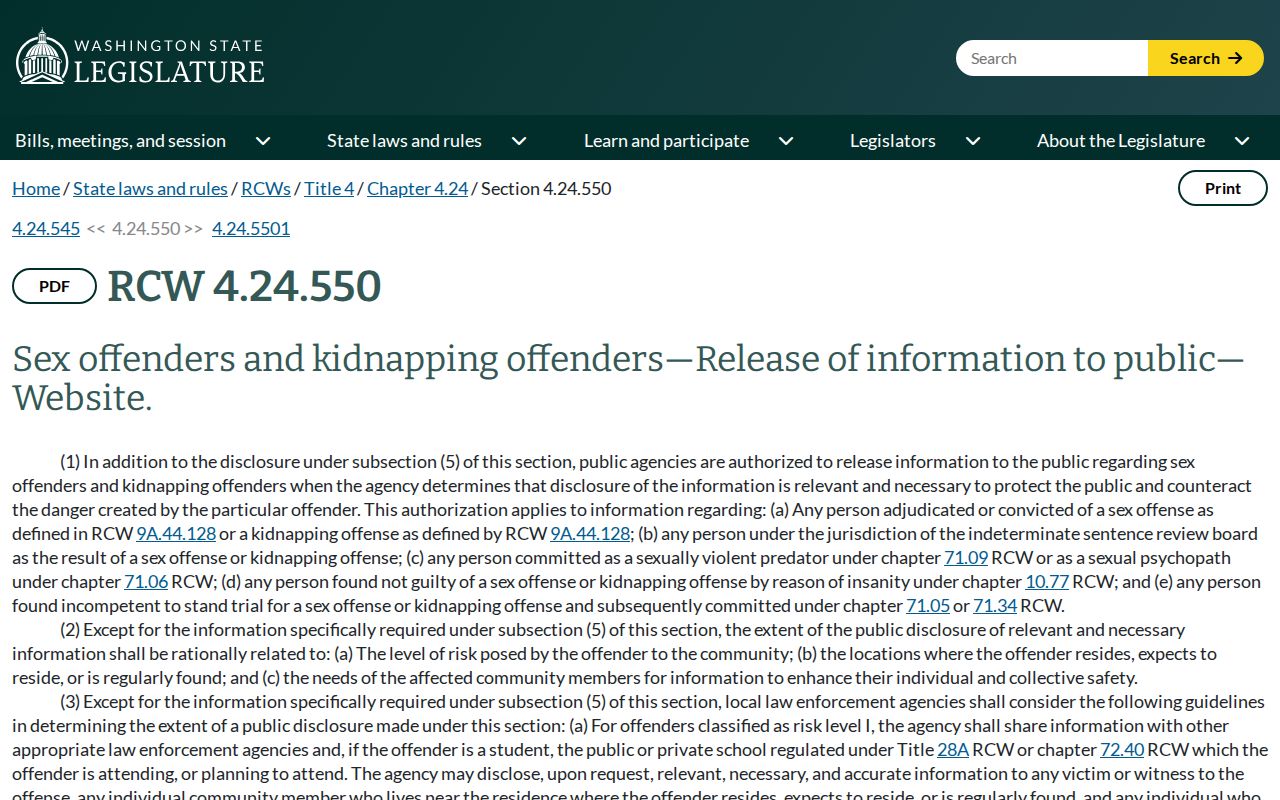
The statute source ties Franklin County public notice to Washington's risk-based rules rather than to an assumption that all registry records must appear in the same way.
Notification serves safety planning. It does not state that a person will commit a new offense, and it does not convert the registry into a list of all local crime. A sound Franklin County registry search stays focused on verified profiles, lawful awareness, and the agency contact shown with the record.
Franklin Registry Duty and Vacation
Washington's vacation-of-conviction statutes are separate from sex offender registration law. A conviction's court status, the public court file, and a registration obligation can follow different rules. Many sex offenses are excluded from ordinary vacation relief. A person reviewing their own history should begin with the sentencing court and current statutes rather than assume a vacated nonqualifying record removes a registration duty.
The Legislature publishes both the misdemeanor vacation statute and its eligibility limits.
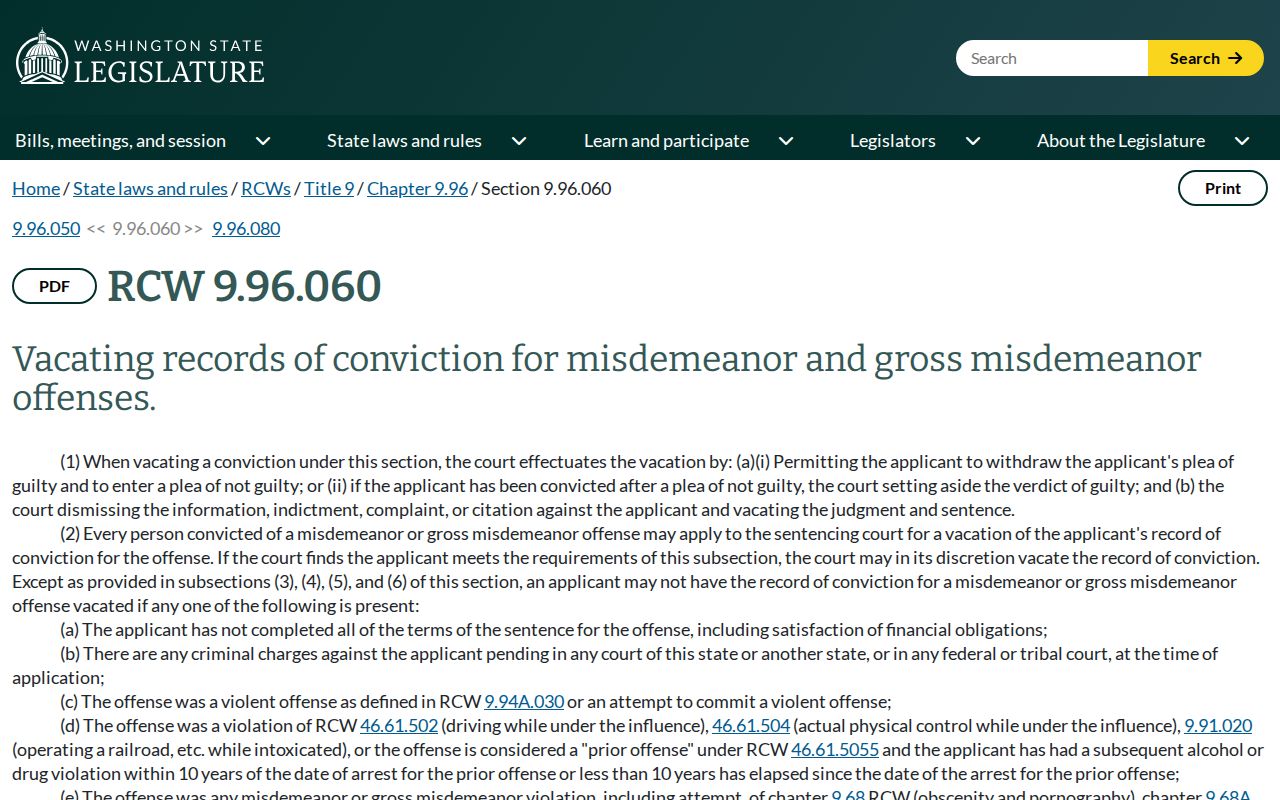
This source helps separate qualifying misdemeanor relief from the registration rules that must be checked on their own terms.
Felony vacation follows a different statute with its own exclusions and conditions. The official felony vacation provision supplies that separate authority.
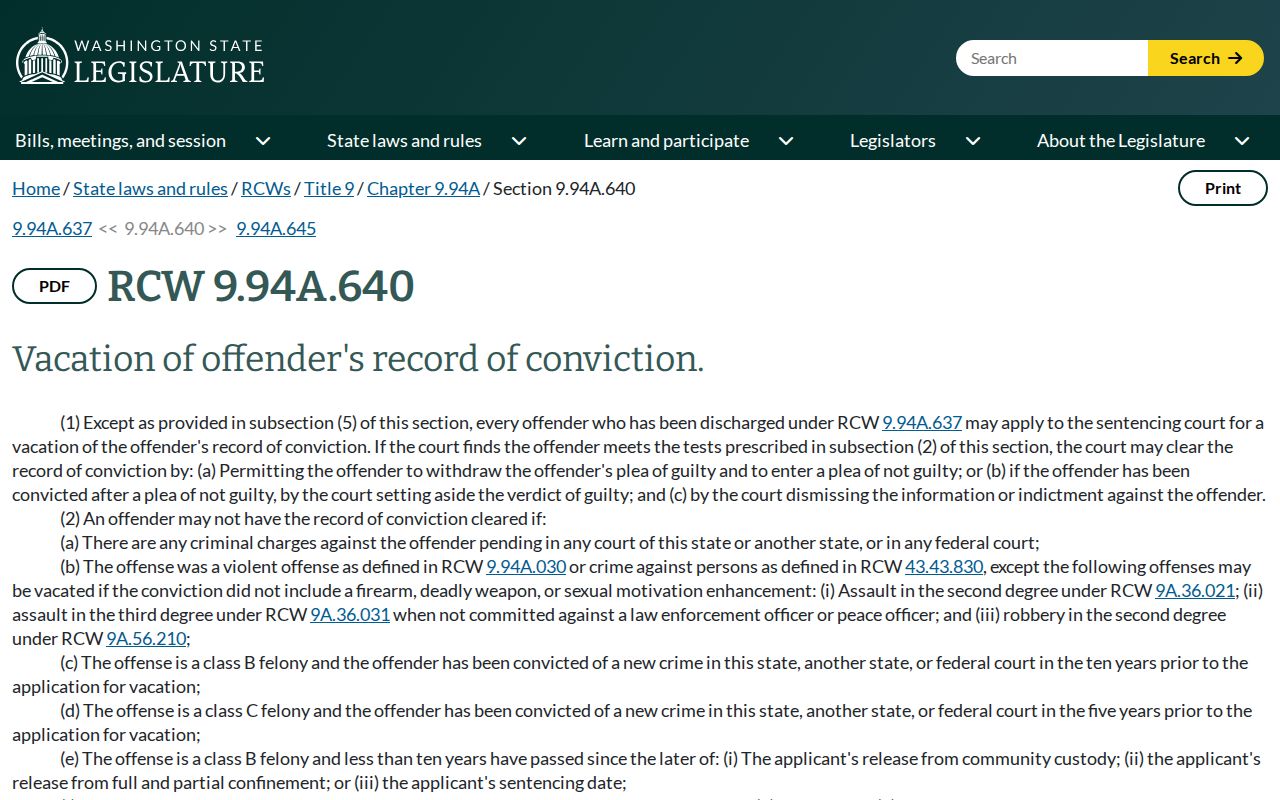
The two vacation sources show why a searcher should not treat record relief, public profile visibility, and ongoing registration as interchangeable questions.
Using Registry Information Lawfully
Registry information may be used for personal and family safety, neighborhood awareness, and an informed talk with law enforcement. It must be read in context. A published address can have timing or status limits. A risk level addresses notification, not certainty. A profile does not prove new misconduct, and absence from a map does not prove the absence of a legal registration duty.
Misuse warning: Using Washington registry information to threaten, intimidate, or harass a registrant or another person is a crime; RCW 4.24.550 governs lawful disclosure.
Suspected noncompliance belongs with law enforcement. Do not approach the person, household, school, or place shown. Give Franklin County officers the public profile reference and the observed discrepancy. This protects the reporter, the community, and the integrity of any official check. The same restraint applies when sharing a result: link to the official current profile instead of circulating a saved image that may soon be stale.
Note: Registry results support community awareness, but the responsible agency and current court record remain the sources for verification.